

The student commute — reaching Karachi University, NED, and FAST on a budget
How university students can use the RedBus network to commute to KU, NED, FAST, and other campuses without burning their allowance.
By RedBus Karachi Team
University is expensive. Tuition, books, supplies, food, rent — by the end of the month, most students have a tight transport budget. The RedBus network offers a genuine alternative to ride-hailing and personal bikes, especially for students commuting along Karachi's University Road corridor.
University Road corridor
The University Road corridor is the academic spine of the city. From NIPA to the Safari Park to the Karachi University gates, this single road passes through the catchment area of half a dozen major institutions. The Red Bus routes R1, R3, R4, R9, and R12 all stop at or near the Nursery and FTC landmarks, which are the gateway to University Road. The older numbered routes also pass through the corridor.
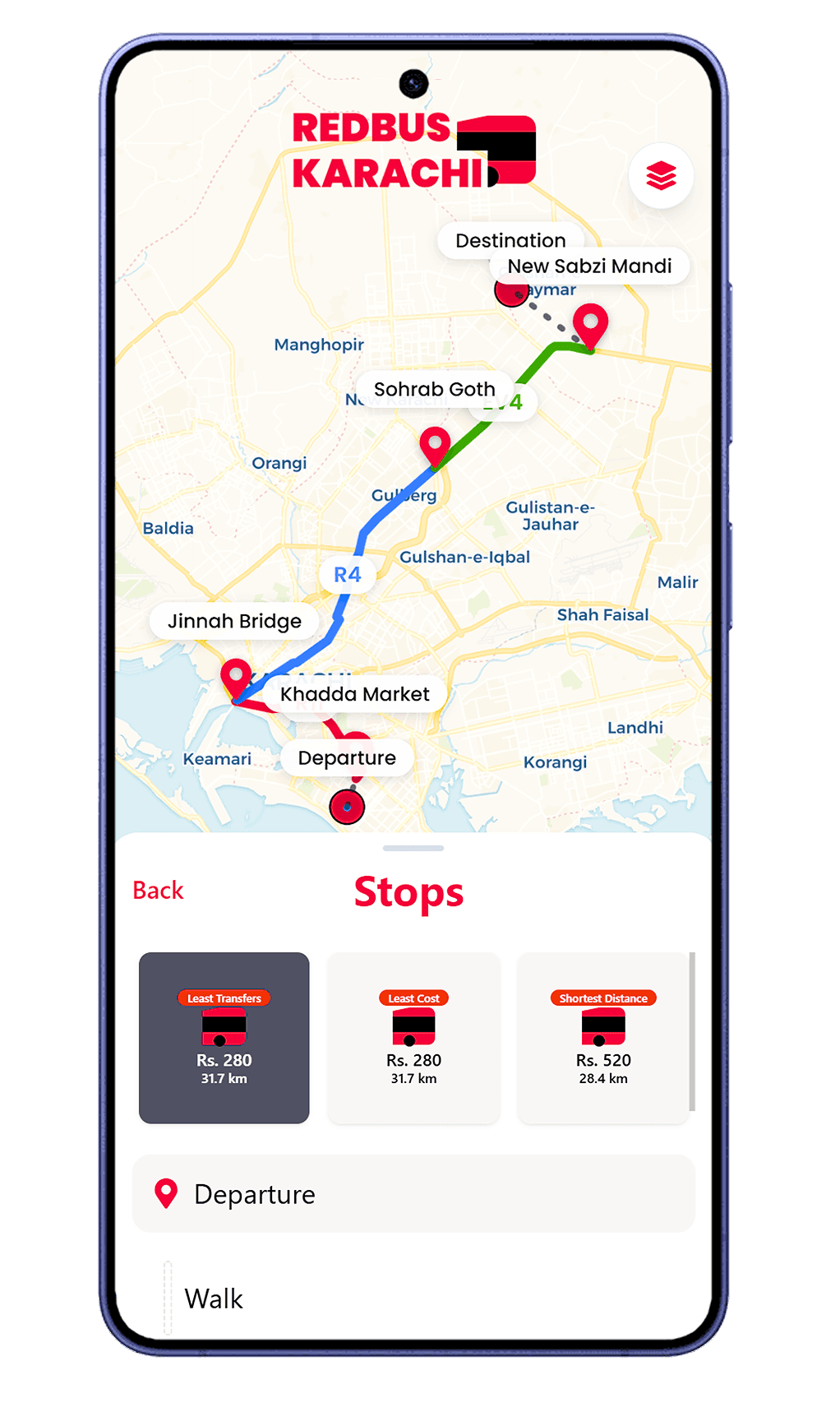
For most students, the simplest approach is to type your university into the app — "Karachi University", "NED University", "FAST Karachi" — and let the Smart End-to-End Routing pick the current best chain of buses.
Reaching Malir and Shah Latif
Students heading to campuses further out — FAST-NUCES at Shah Latif, IBA Main Campus, or any of the universities in the Malir area — face a longer commute but still benefit from the RedBus network.
The EV routes are the most useful for suburban students:
- EV2 (Bahria Town to Malir Halt) connects suburban commuters to the Malir interchange.
- EV3 (Malir Cantt to Numaish) brings commuters from Malir to the central network.
- For many suburban students, a typical commute involves one EV bus to Numaish, then a transfer to an R-series bus to the campus.
The RedBus app's Smart End-to-End Routing will lay this out for you step by step. You don't need to know the routes — type your campus into the app and it does the rest.
The cost difference
For a student commuting daily, the math is the same as for any commuter, but the stakes are higher:
- Ride-hailing to KU from Gulshan: roughly Rs. 350–500 one-way, or Rs. 3,500–5,000 a month for a 5-day week.
- RedBus for the same trip: Rs. 80 one-way (the standard PBS fare for trips up to 15 km), or Rs. 1,760 a month for a 5-day week.
For a student on a Rs. 15,000 monthly allowance, the difference is still huge. The RedBus commute leaves Rs. 3,000+ a month for food, books, or a Friday night out.
Study while you ride
A practical benefit that's easy to miss: the Red Bus buses are air-conditioned and smooth enough to study on. Most commuters spend their bus time on their phone. Students can use it for last-minute assignment cramming, reading, or reviewing notes — the kind of work that's hard to do on a motorbike or in a bumpy minibus.
If you're a regular KU student, a useful habit is to bookmark the bus routes you use in the app. That way, the next time you open the app, your usual commute is one tap away.
A few practical tips
- Travel with classmates when possible. Two students riding together is safer and more pleasant than riding alone, especially during off-peak hours.
- Get a smart card. The Sindh Government's AFC smart card system lets you tap to pay, which is faster than fumbling for change during the morning rush.
- Check the app before you leave. The Red Bus network is reliable but the schedule isn't always minute-precise. The app shows you the next bus's expected arrival.
For a practical first-trip walkthrough, read The ultimate beginner's guide.