

The commuter math — how much you save switching to the Red Bus
A data-driven breakdown comparing Red Bus fares against ride-hailing, personal vehicles, and parking. Most Karachi commuters can save Rs. 15,000+ a month.
By RedBus Karachi Team
Public transit is cheaper than driving. This isn't news. But the actual size of the difference, in Karachi specifically, is more dramatic than most people realise. Here's the math.
The daily bike/car cost
If you drive or ride a personal bike to work every day in Karachi, your true daily cost includes more than just fuel:
- Petrol. A typical 15 km round trip on a 100cc bike burns roughly 0.5 litres of petrol per day. At current Karachi rates (well above Rs. 250/litre in 2026), that's around Rs. 125–150/day, or Rs. 3,000–3,600/month on fuel alone.
- Parking. A paid spot in central Karachi runs anywhere from Rs. 50 to Rs. 200/day. Even the cheaper lots add up. Rs. 3,000–6,000/month is typical.
- Maintenance. Tyres, oil changes, chain maintenance, and the occasional clutch plate for a bike — easily Rs. 1,500–2,500/month amortised.
- The parking mafia. A Rs. 20–50 "fee" demanded at the entrance to many commercial areas. Say Rs. 30/day on the days it happens. Rs. 600/month, conservatively.
A bike commuter in central Karachi typically spends Rs. 8,000 to Rs. 12,000/month to keep riding.
A car commuter in the same scenario — same 15 km each way, but with AC, longer commute times, higher fuel consumption, and more expensive maintenance — is looking at Rs. 25,000 to Rs. 40,000/month total.
The ride-hailing cost
Ride-hailing feels cheaper than driving because you're not paying for the car itself. The math, however, doesn't flatter it:
- Bykea, InDrive, or Yango for a 15 km trip in daytime traffic: roughly Rs. 400–600 each way.
- A typical 5-day work week, both directions, comes to Rs. 4,000–6,000/week, or Rs. 16,000–24,000/month.
Surge pricing pushes this higher during rain, Eid, and rush hour. The "cheap" option isn't actually cheap.
The Red Bus cost
The Red Bus network charges Rs. 80 for trips up to 15 km, and Rs. 120 for trips above 15 km, per person per ride. Two ways to pay:
- Cash. Hand the fare to the conductor as you board. Keep small change ready.
- Smart card. The Sindh Government's Automated Fare Collection (AFC) system — prepaid, tap-to-pay smart cards available at major stops. Faster, and the future of PBS payment.
For a 15 km commute, you're typically looking at:
- One or two buses, one fare per leg. Most in-city trips don't need transfers, so it's a single Rs. 80 fare each way (or Rs. 120 for longer routes).
- Daily cost: Rs. 160–240, or about Rs. 3,500–5,300/month for a 5-day work week.
- No parking, no fuel, no maintenance, no surge pricing.
The monthly total
Comparing apples to apples for a 15 km, 5-days-a-week commute:
| Mode | Monthly cost (PKR) |
|---|---|
| Personal bike | 8,000 – 12,000 |
| Personal car | 25,000 – 40,000 |
| Ride-hailing | 16,000 – 24,000 |
| Red Bus | 3,500 – 5,300 |
The Red Bus is 3–6x cheaper than the alternatives, and Rs. 11,000+ a month cheaper than ride-hailing for an average commuter. Over a year, that's Rs. 130,000+ — more than a month and a half of take-home pay for many Karachi households.
The hidden wins
The price difference is the headline, but the Red Bus has quiet advantages that aren't on the spreadsheet:
- No mental load. The app tells you which bus to take and where to get off. With driving, you're constantly navigating, watching for accidents, and arguing with the parking mafia.
- No depreciation. Every kilometre on a personal vehicle lowers its resale value. The Red Bus's depreciation is somebody else's problem.
- Predictable timing. The Red Bus buses run on fixed routes, so once you know the schedule, your commute time is reliable. Drive-time in Karachi is anything but.
Use the Fare Estimates feature
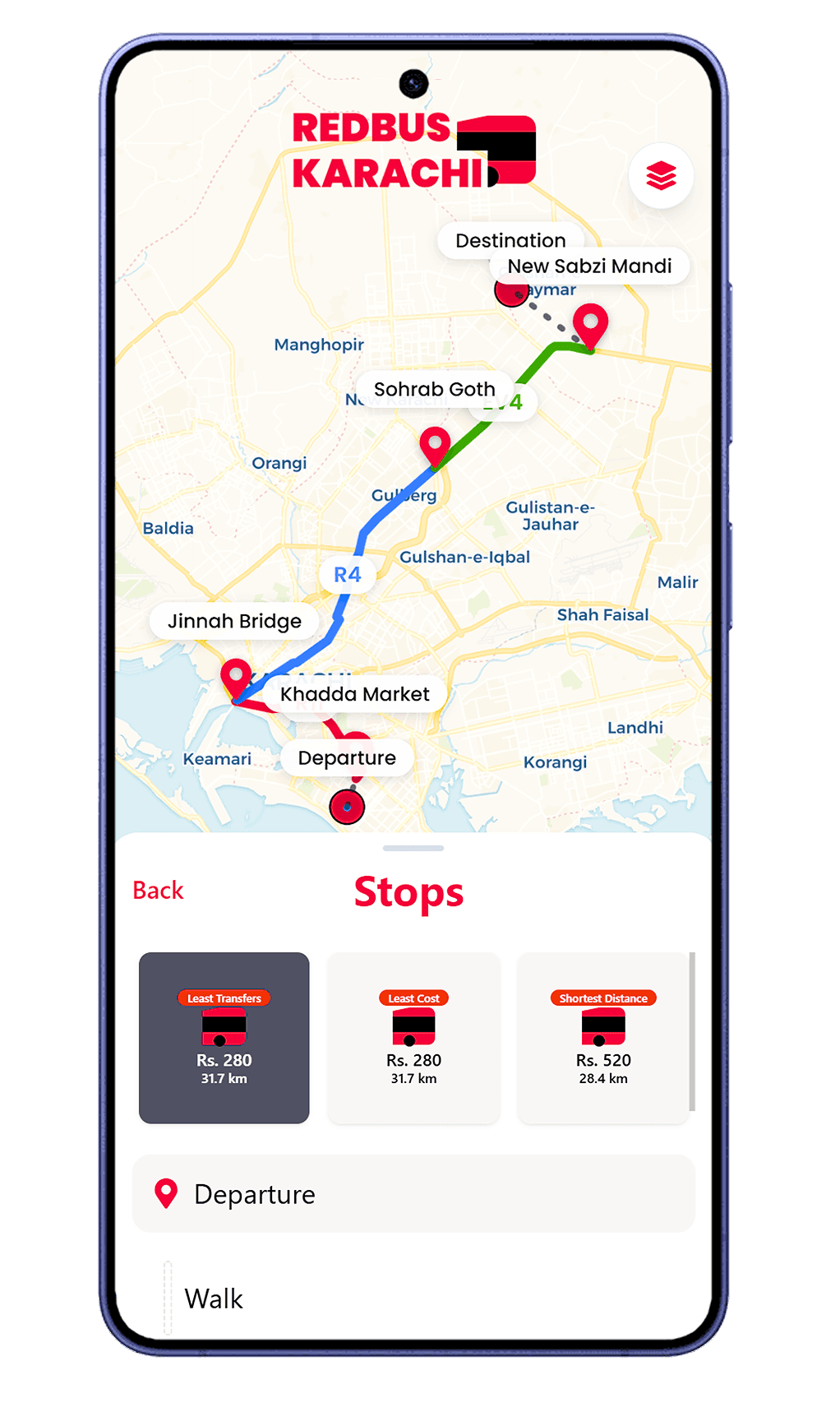
The RedBus Karachi app shows an approximate fare per leg for every bus in your chain. Before you leave home, search for your destination and you'll see exactly what the trip will cost. No surprises, no surge, no "bhai meter se jaana".
For a practical walkthrough of using the app on a typical day, read The ultimate beginner's guide.